
As we close out 2025, it’s impossible to ignore the volume of headlines declaring that coding is dead — replaced by single-line prompts that supposedly generate entire applications. Given the pace of change, it’s understandable why some people believe it. I’ve even had friends ask me, quite seriously, what I plan to do next.
Platforms like Lovable and Bolt, alongside advances in coding assistants, have undeniably shifted the landscape. These are interesting times indeed but having worked in the industry for over 20 years, I’ve seen many waves of hype, disruption, and reinvention. Most of this isn’t new to many of us. However, what is different, is the sheer speed of progress in AI. So when the opportunity came up to trial another coding assistant as part of a work initiative, I was more than happy to jump in.
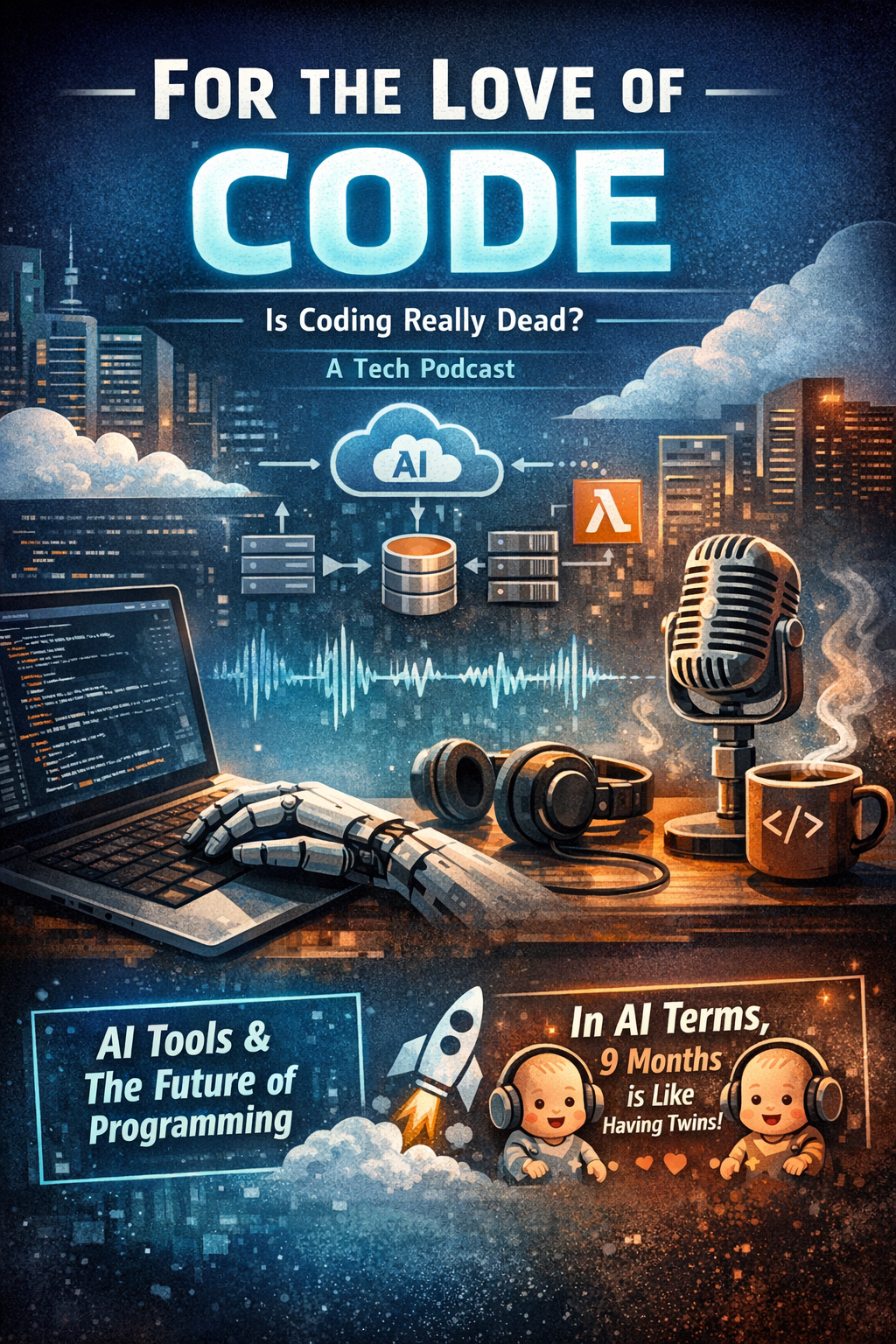
While I can’t discuss the specific tool or internal details, I decided to test it using a realistic, end-to-end scenario. Starting from an OpenAPI specification, the goal was to build a fully-fledged API using Pydantic models, deployed on AWS with API Gateway, Lambda, and DynamoDB — all provisioned via portable Terraform IaC.
The exact tooling isn’t the point of this post. What matters is the outcome, and more importantly, the developer journey.
This wasn’t my first attempt at building a serious project with AI assistance. Earlier in the year I evaluated GitHub Copilot – but that was over nine months ago. And in AI terms, nine months is like having twins: a life-changing experience. If today’s generation of assistants can truly generate production-ready systems directly from an OpenAPI spec, then yes — the role of coding would fundamentally change.
So, here are my top five observations from this experiment.
1. Installation and Setup
The setup was quick, smooth, and genuinely enjoyable.
Why this matters:
Lowering setup friction is critical for adoption. Most developers want to try these tools, but AI tooling rarely makes it onto sprint objectives.
What’s coming:
One-click, opinionated setups bundling code quality checks, security scanning, and CI/CD pipelines.
2. Thought Process Visibility
At every step, the assistant exposed its reasoning, offering clear instructions and options.
Why this matters:
This is more important than the code itself. Developers must feel in control — they’re the ones who will maintain and support the systems.
What’s coming:
Predicting developer intent accurately will be one of the hardest problems to solve, but cracking it would be a major leap forward.
3. Deployment-Ready Pipelines
The generated code was deployable, with placeholders for accounts, environments, and secrets clearly marked.
Why this matters:
Local code is easy. Production-ready systems are not. If these tools are to be used the starting point of coding, they must generate deployable infrastructure from day one.
What’s coming:
Provide credentials and cloud context, and the system deploys end-to-end in a chosen CI/CD flow.
4. Self-Correction and Validation
Hallucinations and invalid code still been generated.
Why this matters:
It proves we’re not there yet. Developers remain critical to validation, correction, and judgment.
What’s coming:
Test-driven generation as the default — no code without tests.
5. “Click Next” Syndrome
The more correct the generated code becomes, the harder it is not to blindly trust it.
Why this matters:
Humans naturally take the path of least resistance, especially when the option is in front of them.
What’s coming:
First-class diffing and validation tools. The winners will be those that make the verification process effortless.
Conclusion
I set out to generate a complete system — from OpenAPI specification to AWS infrastructure — using AI assistance coding. I achieved the goal, but not without corrections and critical intervention that only experience can provide: knowing what to ask, what to validate, and more importantly what not to trust.
So, is coding dead?
Absolutely not.
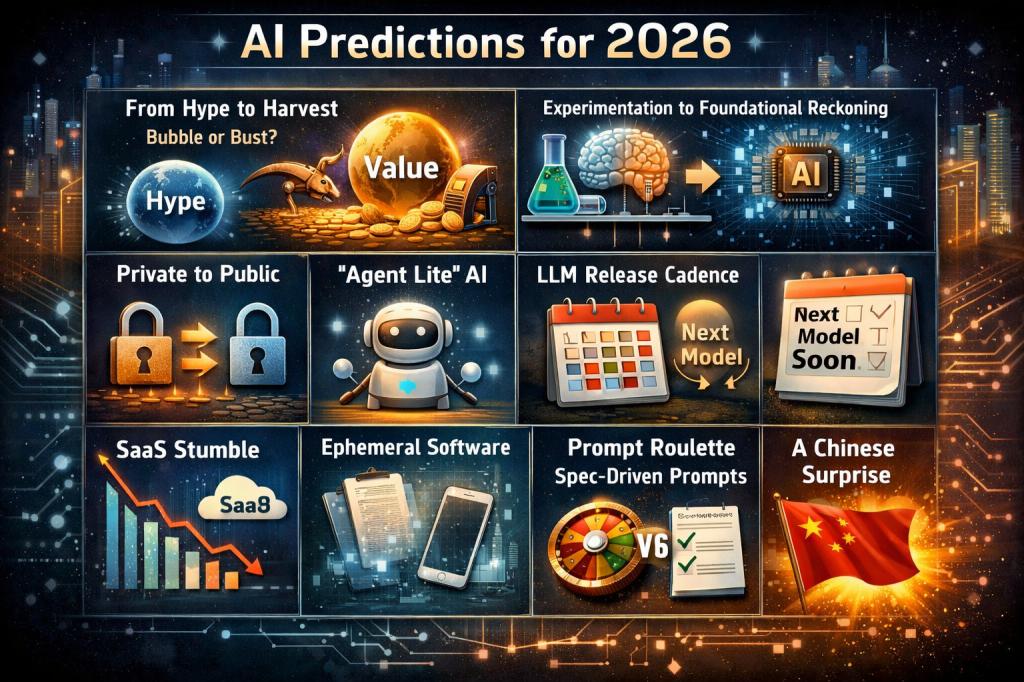
But it is changing. How we write, test, and deploy code is evolving rapidly — and that’s exactly what engineering has always been about: adapting, learning, and using the best tools available to get the job done; bring on 2026 😊.

 Techie Ranch
Leave a comment